
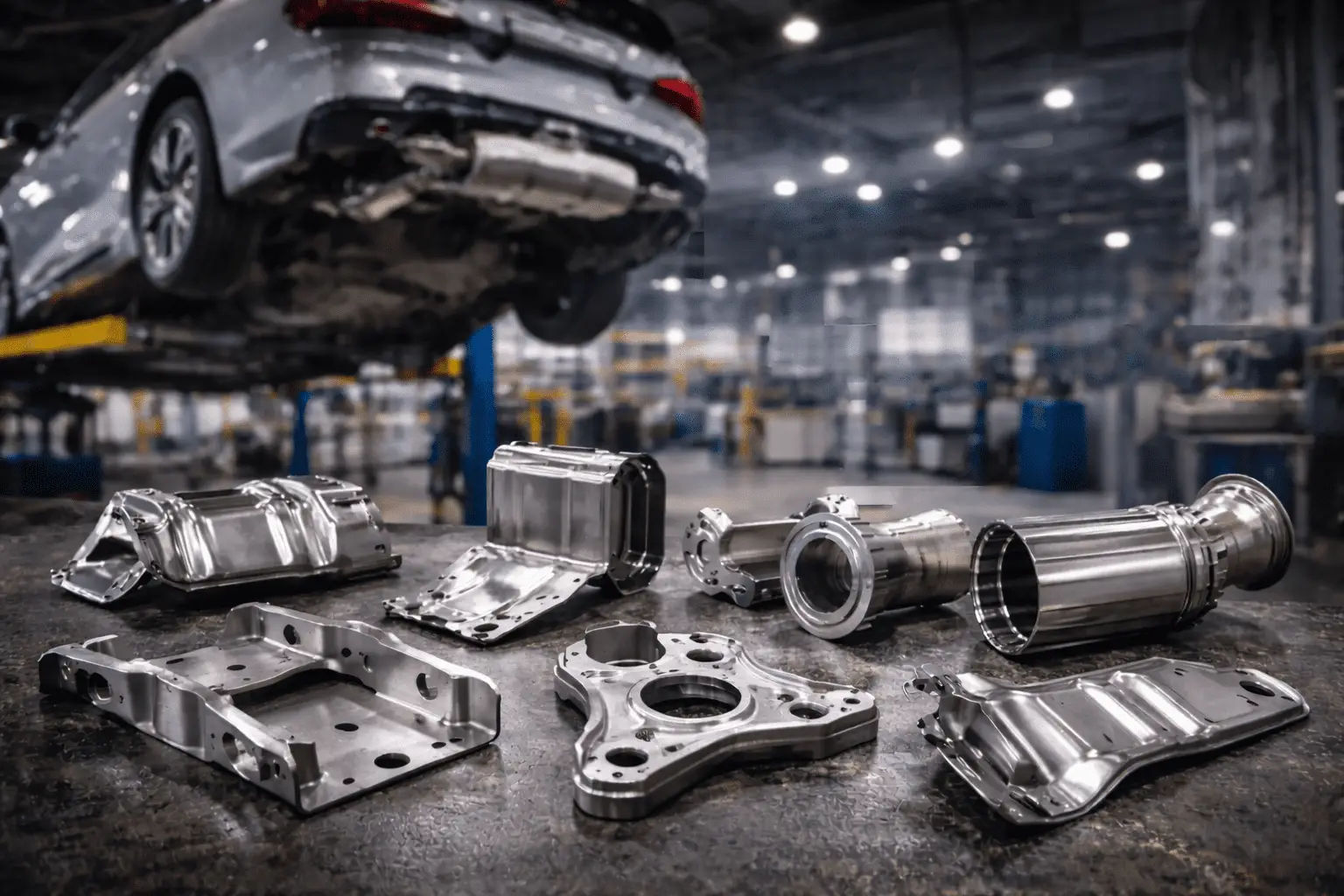
Stainless steel continues to play an important role in automotive manufacturing, particularly in applications where corrosion resistance, mechanical strength, and long-term reliability are essential. As vehicles are expected to perform consistently across diverse climates and operating conditions, materials that offer durability without frequent maintenance are increasingly valued by OEMs and Tier suppliers alike.
One of the key advantages of stainless steel is its exceptional resistance to corrosion and oxidation. Automotive components exposed to moisture, road salts, chemicals, or temperature fluctuations—such as brackets, housings, exhaust-related parts, and certain structural elements—benefit significantly from stainless steel’s inherent protective properties. This resistance helps extend component life and supports improved vehicle reliability over time.
In addition to corrosion resistance, stainless steel offers high strength and excellent fatigue performance, making it suitable for both functional and structural applications. When properly engineered, stainless steel components can withstand repeated mechanical loads, vibrations, and thermal stresses commonly encountered in automotive environments. These properties make it an ideal choice for long-life components that contribute to vehicle safety and performance.
Manufacturing stainless steel components, however, presents unique challenges due to the material’s work-hardening behavior and higher forming forces. Advanced stamping and forming capabilities are required to achieve precise geometries while maintaining surface integrity and dimensional accuracy. At Exenus, specialized tooling, controlled press parameters, and optimized forming processes enable the consistent production of stainless steel components that meet demanding automotive specifications.
Precision tooling plays a critical role in ensuring repeatability and quality. Well-designed dies minimize variation, reduce tool wear, and maintain tight tolerances even during high-volume production. This level of control allows Exenus to deliver components with consistent performance and finish, despite the challenging nature of stainless steel forming.
As automotive manufacturers continue to prioritize durability, safety, and lifecycle cost reduction, stainless steel remains a trusted and reliable material choice. When combined with precision stamping and robust quality systems, it enables the production of components that deliver long-term value across a vehicle’s lifespan—supporting both performance and sustainability goals in modern automotive design.
Leave A Comment