
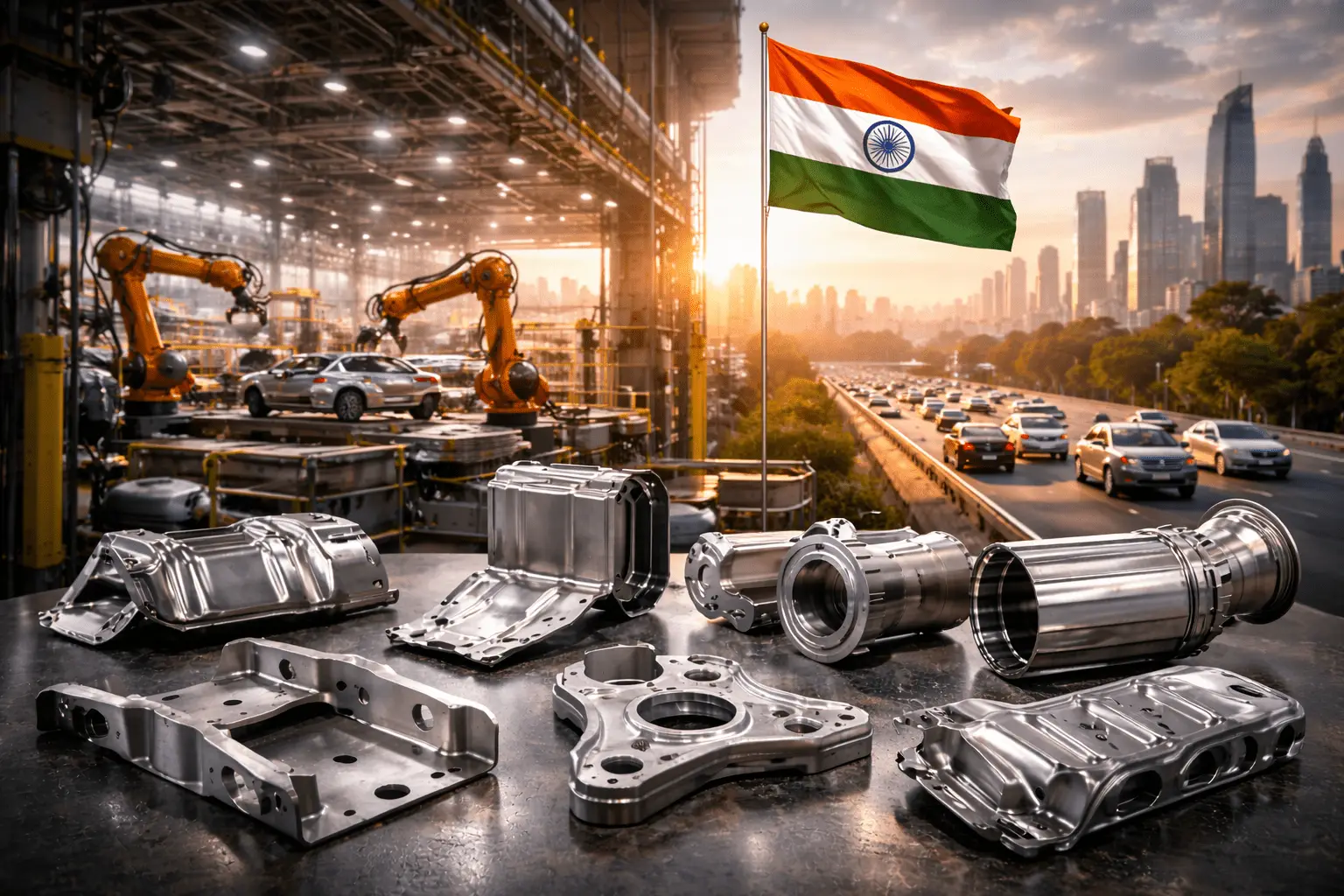
India’s automotive industry is entering a phase of sustained, long-term growth, driven by a combination of strong domestic demand, expanding export markets, and rapid electrification. As one of the world’s largest automotive markets, India continues to attract investments across vehicle manufacturing, component production, and advanced manufacturing technologies. This evolving landscape presents significant opportunities for component manufacturers that are prepared to scale, innovate, and meet global standards.
Rising vehicle ownership, infrastructure development, and increasing focus on mobility solutions are fueling domestic demand across passenger vehicles, commercial vehicles, and two-wheelers. At the same time, India is strengthening its position as a global automotive export hub, supported by competitive manufacturing costs, skilled manpower, and improving logistics infrastructure. These factors make Indian component manufacturers increasingly attractive partners for both domestic and international OEMs.
The ongoing electric vehicle (EV) transition is further reshaping the industry. EV platforms require new component designs, lightweight structures, and precision-engineered parts that meet stringent performance and safety requirements. This shift opens new avenues for manufacturers specializing in stamping, fabrication, and advanced forming processes. Component suppliers that adapt their capabilities to support EV architectures are well-positioned to capture emerging demand.
Companies like Exenus are aligned with this growth trajectory through investments in precision stamping, fabrication expertise, automation, and engineering-led manufacturing. By focusing on quality systems, process optimization, and scalable production, Exenus supports OEMs and Tier suppliers seeking reliable, long-term manufacturing partners. Early involvement in design, strong tooling capabilities, and robust quality control enable faster development cycles and consistent output.
Another key driver of opportunity is the global diversification of supply chains. As OEMs look to reduce dependency on single-region sourcing, India stands out as a stable, cost-competitive, and technically capable manufacturing destination. Indian component manufacturers that meet international quality standards and delivery expectations are increasingly being integrated into global supply networks.
Looking ahead, the future of India’s automotive industry will favor component manufacturers who evolve with changing technologies, regulatory requirements, and customer expectations. Investments in automation, digitalization, and skill development will be critical to maintaining competitiveness. For manufacturers that embrace this transformation, India’s automotive growth story offers not just opportunity—but long-term leadership on the global stage.
Leave A Comment