
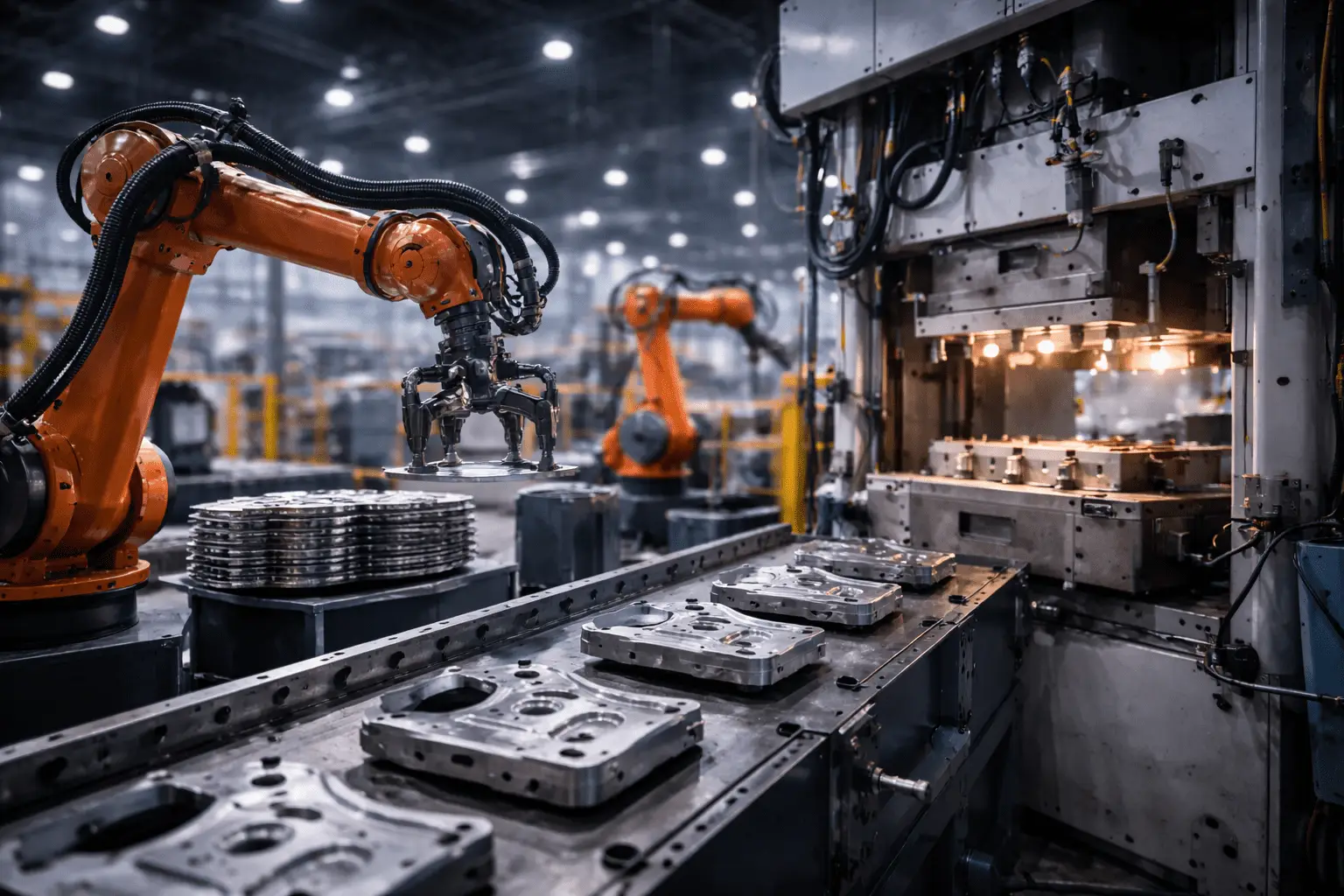
Automation is rapidly transforming automotive component manufacturing, redefining how efficiency, quality, and safety are achieved on the shop floor. As OEMs demand higher volumes, tighter tolerances, and shorter lead times, manufacturers are increasingly adopting automated solutions to remain competitive in a fast-evolving industry.
One of the most significant advantages of automation is improved productivity and consistency. Automated feeding systems, robotic material handling, and synchronized press operations enable continuous, high-speed production with minimal variation. By reducing manual intervention, automation helps eliminate common sources of human error, ensuring repeatable quality across large production batches.
Automation also plays a critical role in workplace safety and ergonomics. Tasks involving heavy materials, repetitive motions, or high-temperature operations are increasingly handled by robots and automated systems. This not only minimizes the risk of injuries but also allows skilled operators to focus on supervision, process optimization, and quality control rather than physically demanding tasks.
At Exenus, automation is implemented as a complement to skilled manpower rather than a replacement. Robotic handling, automated inspection, and real-time process monitoring are integrated with experienced operators and engineers who oversee critical decision-making. This hybrid manufacturing approach combines the precision and speed of automation with human expertise, enabling flexibility across product types and production volumes.
Real-time monitoring and data-driven control systems further enhance process stability. Sensors and automated feedback loops allow deviations to be detected and corrected immediately, reducing scrap rates and unplanned downtime. This level of control is essential for meeting the stringent quality and delivery requirements of today’s automotive supply chains.
As vehicle platforms diversify and production complexity increases, automation is no longer a discretionary investment—it has become a strategic necessity. Manufacturers that successfully integrate automation into their operations are better positioned to scale efficiently, maintain consistent quality, and respond quickly to changing market demands.
In this environment, automation-driven manufacturing enables automotive component suppliers like Exenus to deliver reliable, high-quality components while supporting long-term competitiveness and sustainable growth.
Leave A Comment