
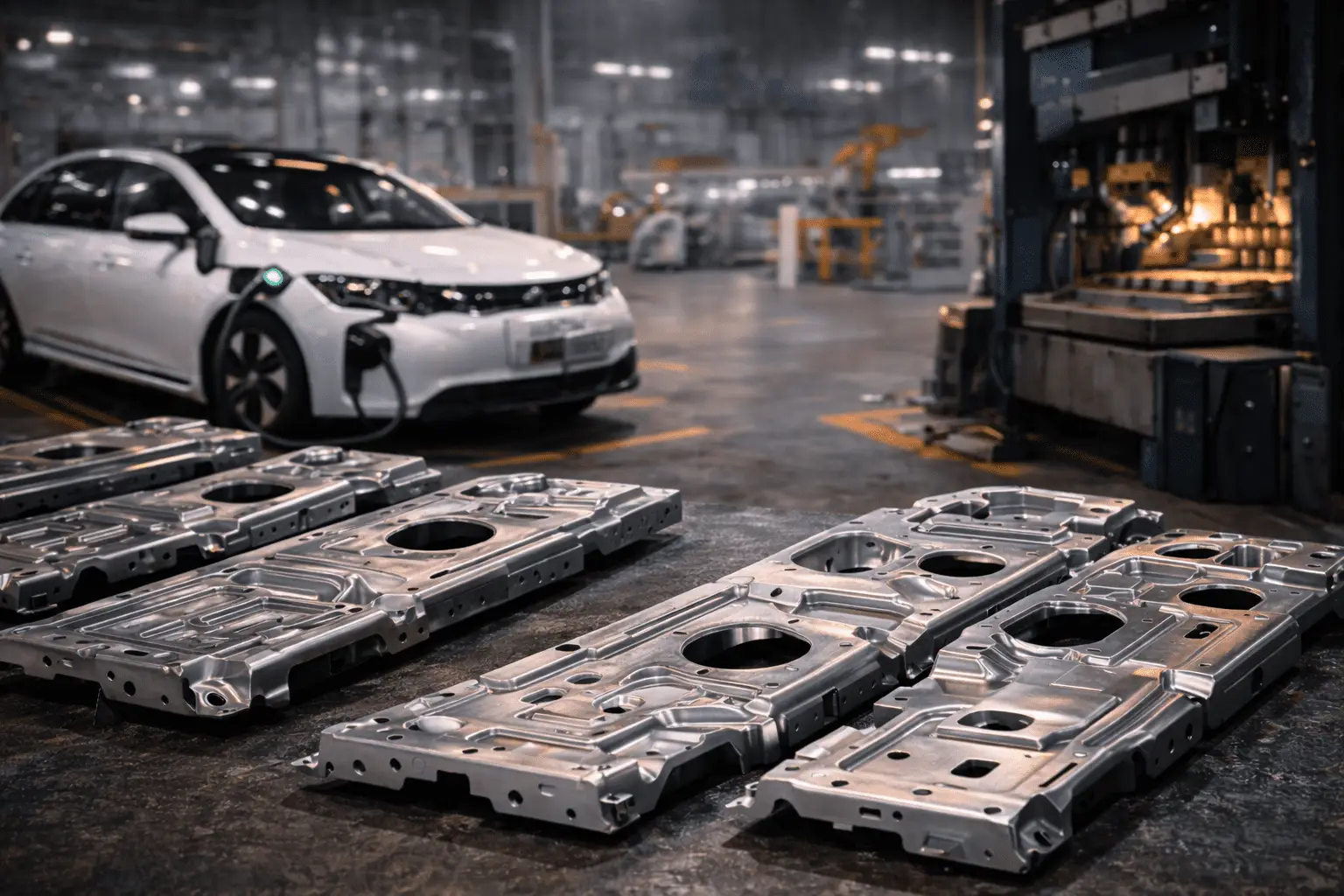
Lightweighting has become a central focus in automotive design as manufacturers work to improve fuel efficiency, reduce emissions, and extend the driving range of electric vehicles. With stricter regulatory norms and rising customer expectations for performance and sustainability, OEMs are increasingly evaluating materials and manufacturing processes that help reduce vehicle mass without compromising safety or durability.
While materials such as aluminum and composites have gained attention in lightweight vehicle programs, advanced steel stamping remains one of the most cost-effective and scalable lightweighting solutions. Modern high-strength and advanced high-strength steels (HSS and AHSS) enable significant weight reduction while retaining excellent structural performance, crashworthiness, and manufacturability.
When precisely stamped, high-strength steels offer an exceptional strength-to-weight ratio, allowing thinner sections to replace heavier conventional steel components. This makes them particularly suitable for structural and safety-critical automotive parts such as reinforcements, brackets, cross members, and body-in-white components. Compared to alternative materials, stamped steel parts also integrate more easily into existing manufacturing and assembly ecosystems.
At Exenus, lightweighting is achieved through a combination of optimized component design, material selection, and controlled forming processes. Advanced tooling, precise press control, and validated forming parameters ensure uniform material flow and dimensional accuracy, even when working with higher-strength materials. This approach minimizes defects such as cracking or thinning while maintaining consistent quality across high-volume production.
Stamped metal components also offer advantages in terms of cost efficiency and recyclability. Steel remains one of the most recycled materials in the automotive industry, supporting sustainability goals without significantly increasing production complexity or cost. Additionally, stamped steel components allow OEMs to scale production efficiently, making them well-suited for both conventional and electric vehicle platforms.
As automotive architectures continue to evolve, lightweighting strategies will increasingly rely on a balanced mix of materials and manufacturing processes. In this landscape, precision-stamped metal components will continue to play a vital role—delivering the right balance of performance, safety, durability, and cost.
For OEMs and Tier suppliers, advanced stamping remains a proven and future-ready solution for achieving lightweight, high-performance automotive designs at scale.
Leave A Comment